

Mia Cook
Mia Cook creates simple, healthy, and delicious recipes. From quick snacks to full meals, her recipes are designed for busy lifestyles and home cooks.
- Mia Cook

- Mia Cook
- Mia Cook
- Mia Cook
This high protein chicken salad solves the biggest problem with the classic version: most recipes are built around mayonnaise, so most of the calories come from fat instead of protein a half-cup serving of a traditional chicken salad can carry 25+ grams of fat and only 14 grams of protein.
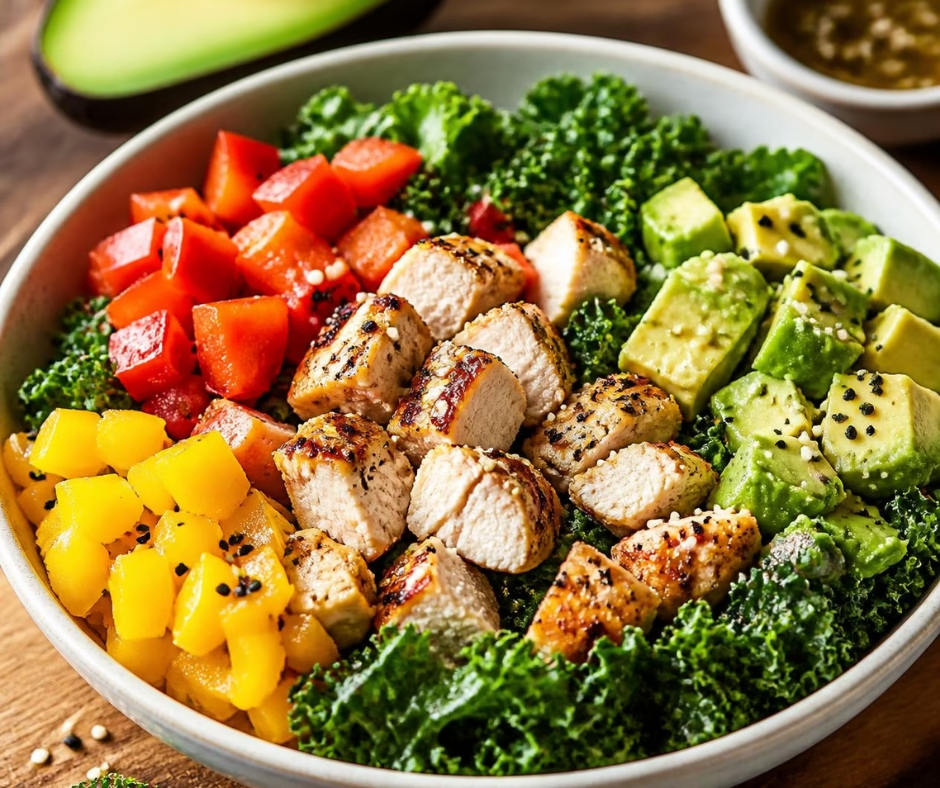
Here, swapping most of the mayo for plain Greek yogurt and using a full portion of chicken breast gets you to around 30 grams of protein per serving without losing the creamy texture. This article covers what actually counts as “high protein” for a chicken salad, a tested recipe with exact nutrition numbers, the swaps that change the protein count the most, common mistakes that quietly lower it, and how long the salad holds up in the fridge for meal prep.
What Counts as “High Protein” for a Chicken Salad?
A chicken salad earns the “high protein” label when it delivers at least 20 grams of protein per serving roughly 30–40% of the Daily Value on a 2,000 calorie diet. A traditional mayo based version usually falls short of that, landing closer to 14–18 grams per half cup because mayonnaise contributes almost no protein of its own.
The recipes that reach 30–40+ grams per serving get there the same way: more actual chicken relative to filler, and a dressing base (Greek yogurt or cottage cheese) that adds protein instead of just fat.
Why Traditional Chicken Salad Falls Short on Protein
Classic chicken salad is built on a simple ratio: shredded chicken, a heavy pour of mayonnaise, and a few vegetables for crunch. The problem is that mayonnaise is almost pure fat about 10 grams of fat and close to zero protein per tablespoon so a generous dressing can double the calorie count of a serving without adding anything toward your protein target.
A typical mayo forward chicken salad lands around 290–370 calories and 25–30 grams of fat per serving, for only 14–18 grams of protein. That’s not “unhealthy” in isolation, but it’s an inefficient use of calories if protein and satiety are the goal.
High Protein Chicken Salad Recipe
This version uses plain nonfat Greek yogurt for most of the dressing, with a small amount of mayo for flavor and mouthfeel, and keeps the chicken portion generous rather than diluting it with a lot of filler.
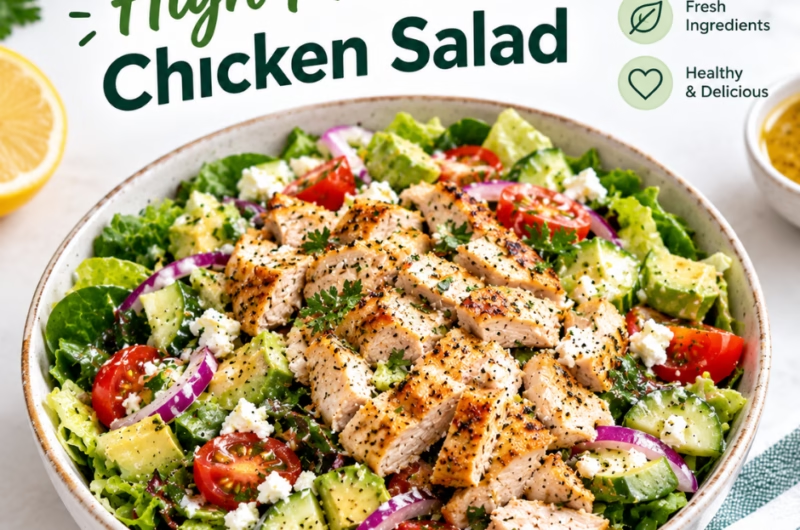
High Protein Chicken Salad Recipe (Ready in 20 Minutes) *
Course: High Protein RecipesCuisine: futurehlthy4
servings15
minutes45
minutes230
kcalIngredients
1 lb (454 g) cooked, boneless, skinless chicken breast, diced or shredded (rotisserie chicken works)
3/4 cup (170 g) plain nonfat Greek yogurt
2 tbsp light mayonnaise
1 tbsp Dijon mustard
1 tbsp fresh lemon juice
2 celery stalks, finely diced
1/4 cup red onion, finely diced
2 tbsp fresh dill or chives, chopped
Salt and black pepper, to taste
Directions
- Dice the chicken. Cut cooked chicken breast into small, even cubes, or shred it with two forks for a finer texture.
- Build the dressing. In a large bowl, whisk together the Greek yogurt, light mayo, Dijon mustard, and lemon juice until smooth.
- Add the crunch. Fold in the celery, red onion, and herbs.
- Combine. Add the chicken to the dressing and mix until every piece is coated evenly.
- Season and chill. Season with salt and pepper, then refrigerate for at least 20 minutes before serving the flavor sharpens as it sits.
- Serve. Spoon over greens, into a wrap, between two slices of bread, or straight into a meal prep container.
Notes
- Figures are estimates based on standard USDA values for cooked skinless chicken breast (about 31 g protein per 100 g) and plain nonfat Greek yogurt; exact numbers will shift slightly with brand and portioning.
Nutrition Per Serving (about 3/4 cup)
| Nutrient | Amount |
|---|---|
| Calories | ~230 |
| Protein | ~30 g |
| Fat | ~8 g |
| Carbohydrates | ~6 g |
| Fiber | ~1 g |
Protein-Boosting Swaps: Comparing Your Base Options
The protein base you choose changes the final count more than any other single ingredient. Here’s how the common options compare per 100 g, along with typical cost and prep time:
| Protein Source | Protein per 100g | Relative Cost | Prep Time |
|---|---|---|---|
| Chicken breast, cooked | ~31 g | Moderate | 15–25 min (or 0 with rotisserie) |
| Canned tuna, in water | ~26 g | Low | 0 min |
| Plain nonfat Greek yogurt | ~10 g | Low–moderate | 0 min |
| Low-fat cottage cheese | ~11 g | Low | 0 min |
| Canned chickpeas, drained | ~7–8 g | Low | 0 min |
How to use this table: chicken and tuna are your protein anchors; Greek yogurt and cottage cheese work best as dressing bases that add protein on top of the anchor, rather than replacing it.
Common Mistakes That Quietly Lower the Protein Count
- Under-portioning the chicken. Recipes that stretch a small amount of chicken with a lot of mayo and vegetables dilute the protein-to-calorie ratio, even if the recipe is labeled “high protein.”
- Not accounting for cooking loss. Raw chicken loses roughly 20–25% of its weight during cooking as water evaporates. If you’re portioning by raw weight, the cooked yield and the total protein per serving will be lower than expected.
- Relying on protein powder as a shortcut. Unflavored protein powder can technically raise the gram count, but it tends to make the texture chalky and isn’t necessary when Greek yogurt or cottage cheese already does the job.
- Skipping the fiber math. Adding a lot of high-fiber ingredients (chickpeas, extra celery, whole grains) alongside a high-protein dressing in one sitting can cause digestive discomfort for some people introduce fiber-heavy add-ins gradually rather than all at once.
Storage and Meal Prep
Store the finished salad in an airtight container in the refrigerator for up to 4 days. The flavor typically improves after the first day as the dressing settles into the chicken. For batch cooking:
- Cook or shred a larger batch of chicken breast at the start of the week.
- Mix the dressing separately and store it in its own container if you’re prepping more than 2 days ahead this keeps the celery and onion from softening too early.
- Combine individual portions into meal prep containers, or keep the salad in one large container and portion it out daily.
Avoid freezing the yogurt and mayo-based dressing separates and turns watery once thawed.
Is Chicken Salad Healthy?
Chicken salad can be a healthy, high-protein meal or a calorie-dense one it depends almost entirely on the dressing. A version built on Greek yogurt or a light mayo blend, like the recipe above, delivers around 230 calories and 30 grams of protein per serving, which supports satiety and muscle recovery without excess fat.
A version built on full-fat mayo alone can run 290–370+ calories per serving with 25+ grams of fat and comparatively little protein. Neither version is “bad” in moderation, but if the goal is a high protein diet, the yogurt-based approach gets you there more efficiently.
Is Chicken Caesar Salad Healthy?
A chicken Caesar salad’s healthiness depends on the same variable: the dressing and the cheese. Traditional Caesar dressing is oil and egg yolk based with parmesan and often croutons, which can push a single serving past 400–500 calories with high sodium from the cheese and dressing. Swapping in grilled chicken breast, going light on the dressing, and skipping the croutons brings it closer in line with a high protein diet, while keeping the classic flavor.
Is Chicken Salad Chick Healthy?
Chicken Salad Chick, like most restaurant chicken salad, varies significantly by flavor some varieties lean on mayonnaise more heavily than others, and portion sizes at a restaurant are harder to control than a homemade batch. If you’re tracking protein and calories closely, a homemade version like the one above gives you more control over both the mayo to yogurt ratio and the exact portion size.
FAQ
How much protein should a “high protein” chicken salad have?
At least 20 grams per serving is a reasonable baseline, with well optimized recipes reaching 30–40+ grams by using a full portion of chicken and a protein rich dressing base like Greek yogurt or cottage cheese.
Can I make high protein chicken salad without mayo?
Yes. Replacing all the mayo with plain Greek yogurt or blended cottage cheese keeps the texture creamy while increasing the protein and lowering the fat per serving.
Rotisserie chicken breast has a similar protein content to home cooked chicken breast, but the skin and any seasoning brine can add extra sodium and fat remove the skin if you’re tracking those numbers closely.
Up to 4 days in an airtight container. The flavor tends to deepen over the first day.
It’s not recommended. Yogurt and mayo based dressings separate and turn watery after freezing and thawing.
Both work well. Greek yogurt has a tangier flavor and blends smoothly on its own; cottage cheese needs to be blended to avoid a curdy texture but can push the protein count slightly higher.
The recipe above is already low in carbs at roughly 6 g per serving. To go lower, skip any fruit add-ins like grapes or apple and add extra celery or cucumber for crunch instead.
Yes, though canned chicken tends to have a softer texture and slightly higher sodium. Drain it well before mixing.
It works over mixed greens, in a lettuce wrap, between two slices of whole-grain bread, or on its own with whole grain crackers.
Conclusion
The gap between a chicken salad that keeps you full for hours and one that leaves you hungry by mid afternoon usually comes down to one swap: replacing most of the mayo with Greek yogurt or cottage cheese. That single change takes this recipe from the 14–18 grams of protein you’d get from a traditional version to around 30 grams per serving, without sacrificing the creamy texture chicken salad is known for.
Start with the recipe above as written, then adjust the yogurt-to-mayo ratio to taste it holds well in the fridge for up to 4 days, so it’s worth making a full batch for the week.

