

Mia Cook
Mia Cook creates simple, healthy, and delicious recipes. From quick snacks to full meals, her recipes are designed for busy lifestyles and home cooks.
- Mia Cook
- Mia Cook
- Mia Cook
- Mia Cook

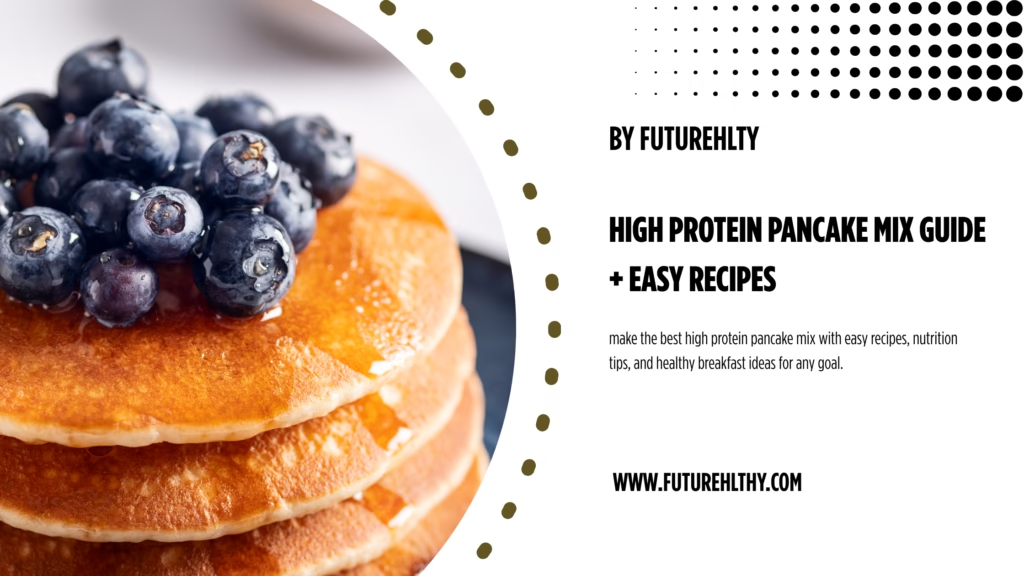
A high protein pancake mix is a dry blend of oats and protein powder. It cooks into pancakes with 20 g or more of protein per serving.
Boxed pancake mixes taste good. They also leave you hungry by mid morning, since a serving has only a few grams of protein. This homemade high protein pancake mix changes that.
Stir the dry mix into eggs, Greek yogurt, and milk. You get three fluffy pancakes with about 24 g of protein and 254 calories. Below you’ll find the master recipe and four variations.
You’ll also get a protein source comparison, common mistakes, and a freezer plan for busy weeks. All nutrition figures are estimates based on standard USDA ingredient values and a typical whey powder label.
At a Glance
- Prep time: 10 minutes
- Cook time: 15 minutes
- Total time: 25 minutes
- Makes: 12 pancakes (4 servings of 3)
- Per serving: 254 calories, 24 g protein, 23 g carbs, 7 g fat
- Dry mix storage: up to 2 months in an airtight jar
- Cooked pancakes: 3–4 days in the fridge, 2 months in the freezer
What Counts as High Protein in a Pancake?
A pancake serving counts as high protein at 20 g or more of protein. That is the bar this article uses for a main breakfast. Many sports nutrition guides suggest roughly 20–30 g of protein per meal, so 20 g sits at the low end of that range.
Food labels use a different yardstick. In the U.S., a “high in protein” claim generally needs 20% of the Daily Value. That works out to 10 g per serving. Rules in Canada and Australia differ, so check local labelling guidance before comparing products.
Pancakes from a standard boxed buttermilk mix typically land at roughly 6–10 g of protein per three pancake serving. The exact number depends on the brand and the eggs and milk you add. That gap is why a protein-boosted mix makes a real difference at breakfast.
High Protein Pancake Mix: 24 g Protein Per Serving
A high protein pancake mix is a dry blend of oats and protein powder. It…
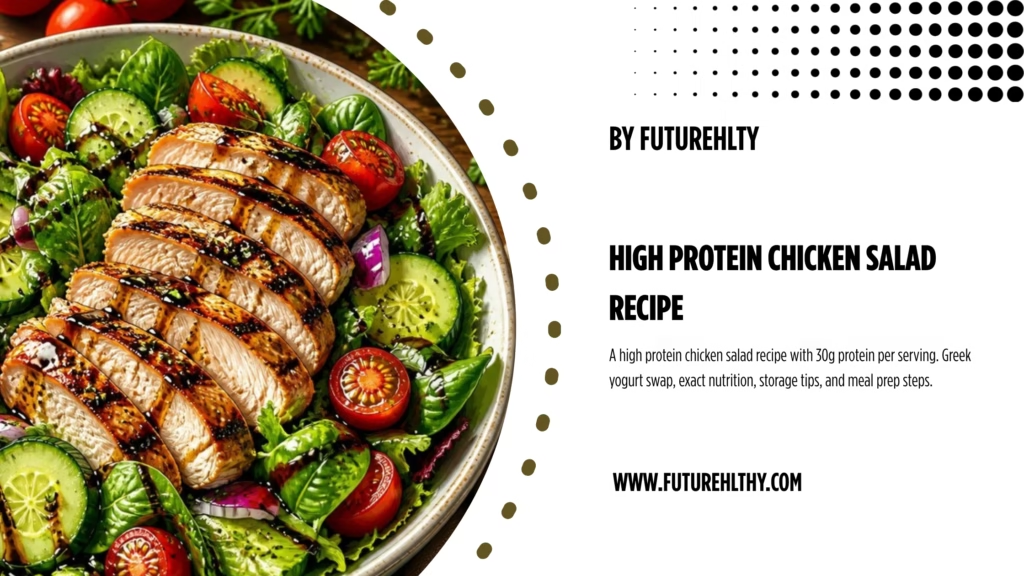
High Protein Chicken Salad Recipe (Ready in 20 Minutes)
This high protein chicken salad solves the biggest problem with the classic version: most recipes…
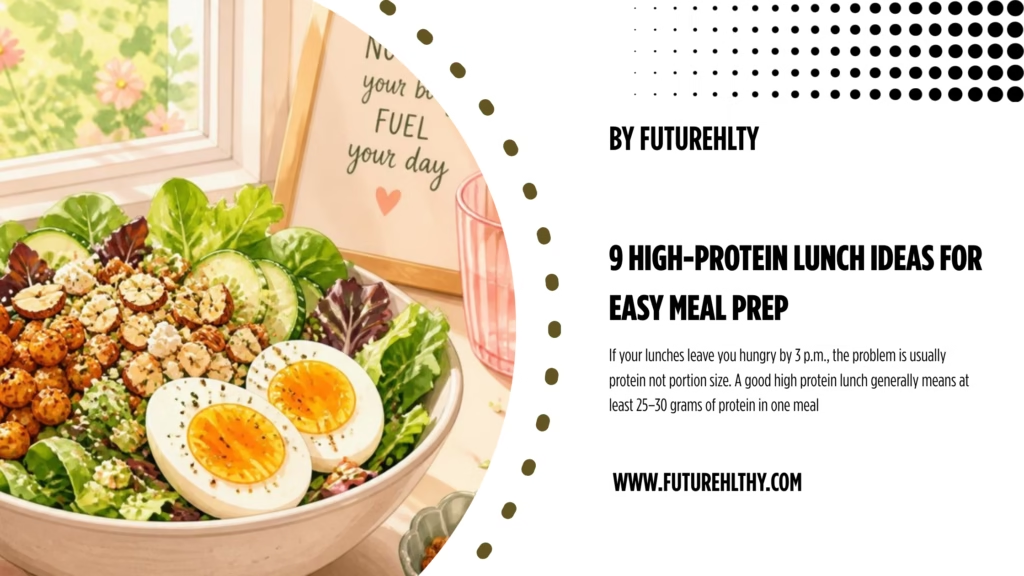
High Protein Lunch Ideas for Easy Meal Prep
If your lunches leave you hungry by 3 p.m., the problem is usually protein not…
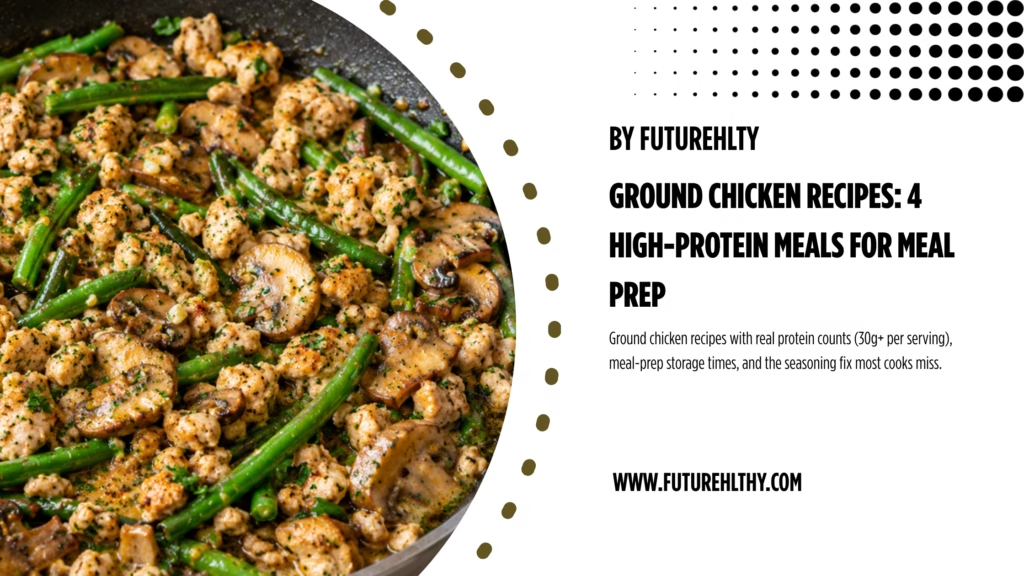
Ground Chicken Recipes with real protein counts
If you’ve stocked up on ground chicken but keep landing on the same bland stir…
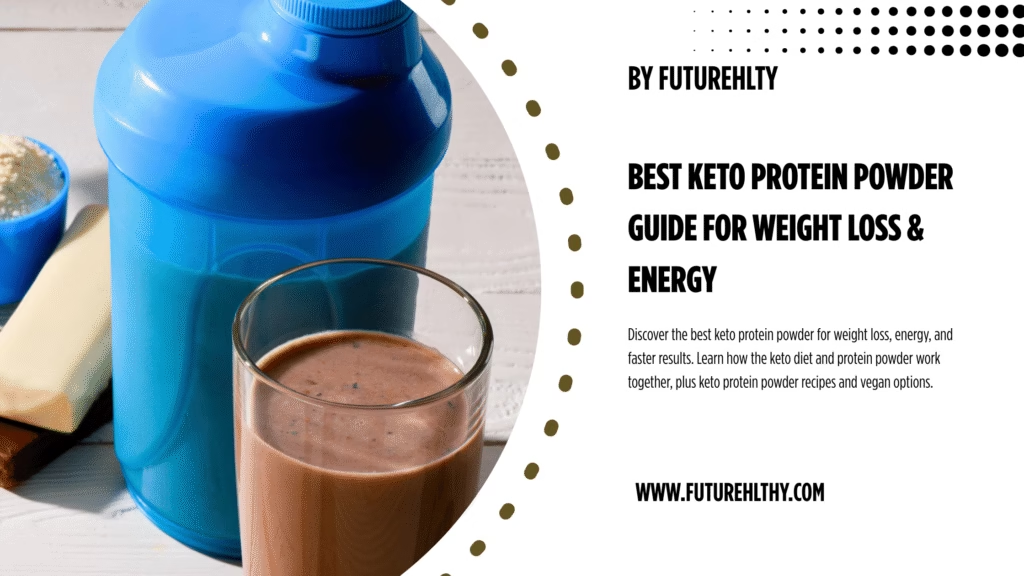
Best Keto Protein Powder Guide for Weight Loss & Energy
Best Keto Protein Powder Guide for Weight Loss & Energy If you are on a…
Vegetarian Meal Prep Recipes | Easy & High-Protein Ideas
Some weeks feel busy before they even begin. You want to eat healthy, save time,…
Why Make Your Own High Protein Pancake Mix?
A homemade mix lets you choose the protein, sugar, and ingredients. It also makes weekday pancakes a 2 minute job. The dry work is already done.
Benefits
- Control over macros. You choose the protein powder, the sweetener, and the flour.
- Consistent results. Weigh the mix once and every batch cooks the same way.
- Easy customizing. Swap oats for another flour or dairy for a plant option without hunting for a new product.
- Better breakfast pancakes for meal prep. High protein breakfast pancakes freeze and reheat well, so one cooking session covers several mornings.
Realistic drawbacks
- Upfront cost. A tub of protein powder costs more than a box of standard mix.
- Texture learning curve. Protein powder absorbs liquid and browns fast, so heat and batter thickness matter.
- Digestion. A large serving of protein plus oat fiber can feel heavy for some people. Flavored powders with sugar alcohols can also cause bloating. Start with one serving and see how you feel.
- Measuring. The recipe works best when you weigh the mix on a kitchen scale.
High Protein Pancake Mix Recipe
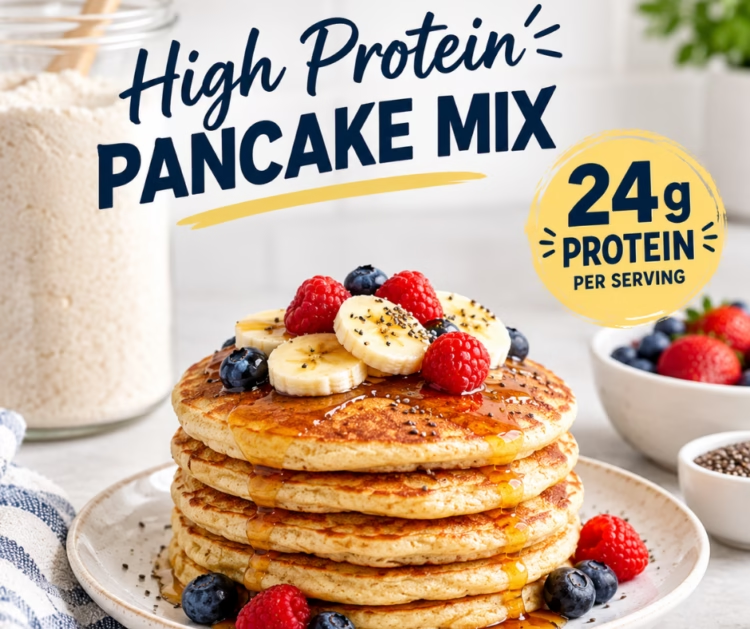
High Protein Pancake Mix: 24 g Protein Per Serving
Course: High Protein RecipesCuisine: futurehlthy4
servings10
minutes15
minutes1,017
kcalA homemade high protein pancake mix made with oats and whey protein. Stir it into eggs, Greek yogurt, and milk for fluffy pancakes with 24 g of protein per serving. The dry mix makes 2 batches and keeps for 2 months.
Ingredients
- Dry mix (makes 2 batches)
2 cups (180 g) rolled oats
4 level scoops (about 120 g) vanilla whey protein powder
2 tablespoons (25 g) granulated or coconut sugar
4 teaspoons baking powder
1 teaspoon ground cinnamon
½ teaspoon fine salt
- For each batch
170 g (about half) of the dry mix
2 large eggs
¾ cup (180 g) plain nonfat Greek yogurt
¾ cup (180 ml) 2% milk, or milk of choice
1 teaspoon vanilla extract
1 teaspoon neutral oil, for the pan
Instructions
- Make the dry mix. Blend the oats on high for 30–45 seconds until fine. Whisk with the protein powder, sugar, baking powder, cinnamon, and salt. Store in an airtight jar.
- Measure. Weigh out 170 g of the mix, about half.
- Whisk the wet ingredients. Whisk the eggs, Greek yogurt, milk, and vanilla until smooth.
- Combine. Fold the dry mix into the wet mixture until just combined. Small lumps are fine. If the batter is thicker than thick yogurt, add 1–2 tablespoons of milk.
- Rest. Let the batter sit for 5 minutes.
- Heat the pan. Warm a nonstick skillet or griddle over medium-low heat, about 325°F (165°C). Brush on a thin film of oil.
- Cook. Pour ¼ cup of batter per pancake. Cook 2–3 minutes, until the edges set and bubbles form. Flip and cook 1–2 minutes more.
- Serve or cool. Eat right away, or cool on a wire rack before storing.
Notes
- Cook one test pancake first. If it browns before the center sets, lower the heat.
Weigh the mix for consistent results.
Dry mix keeps up to 2 months in an airtight jar. Cooked pancakes keep 3–4 days in the fridge or about 2 months in the freezer.
Reheat until steaming hot, to 165°F (74°C).
Casein or plant protein powders absorb more liquid, so add 2–4 tablespoons of milk. - The full recipe (one batch) comes to about 1,017 calories, which makes 12 pancakes and 4 servings.
Per serving: 254 calories, 24 g protein, 23 g carbs, 7 g fat
The full recipe (one batch) comes to about 1,017 calories, which makes 12 pancakes and 4 servings.
| Part of the batch | Calories |
|---|---|
| Half the dry mix (oats, whey, sugar) | ~638 |
| 2 large eggs [more] | ~143 |
| ¾ cup nonfat Greek yogurt | ~106 |
| ¾ cup 2% milk | ~90 |
| 1 tsp oil | ~40 |
| Vanilla, baking powder, cinnamon, salt | ~0 |
| Total per batch | ~1,017 |
- Per serving (3 pancakes): about 254 calories.
- Per pancake: about 85 calories.
- Whole dry mix (2 batches): about 1,276 calories before the wet ingredients are added.
These are estimates. The whey figure assumes about 120 calories per 30 g scoop, so check your powder’s label. Toppings like syrup or peanut butter add to the total.
Nutrition Per Serving (3 Pancakes)
| Nutrient | Amount |
|---|---|
| Calories | 254 kcal |
| Protein | 24 g |
| Carbohydrates | 23 g |
| Fat | 7 g |
| Fiber | 2 g |
These are estimates. Protein powders vary by brand, so recalculate with your own label if you use a different product.
High Protein Pancake Mix: 24 g Protein Per Serving
A high protein pancake mix is a dry blend of oats and protein powder. It…
High Protein Chicken Salad Recipe (Ready in 20 Minutes)
This high protein chicken salad solves the biggest problem with the classic version: most recipes…
High Protein Lunch Ideas for Easy Meal Prep
If your lunches leave you hungry by 3 p.m., the problem is usually protein not…
Ground Chicken Recipes with real protein counts
If you’ve stocked up on ground chicken but keep landing on the same bland stir…
Best Keto Protein Powder Guide for Weight Loss & Energy
Best Keto Protein Powder Guide for Weight Loss & Energy If you are on a…
Vegetarian Meal Prep Recipes | Easy & High-Protein Ideas
Some weeks feel busy before they even begin. You want to eat healthy, save time,…
Which Protein Source Works Best in Pancakes?
Whey concentrate or a whey casein blend gives the softest, most pancake like texture. Plant powders work too, but they behave differently in the pan.
| Protein source | Protein per 100 g (approx.) | Best for | Watch out for |
|---|---|---|---|
| Whey protein powder | 75–90 g | Soft, fluffy pancakes | Browns fast, dries out if overcooked |
| Casein or whey-casein blend | 75–80 g | Thick, moist batter | Absorbs a lot of liquid |
| Pea or plant protein blend | 70–80 g | Dairy-free mixes | Earthy taste, denser crumb |
| Rolled oats | 13 g | Fiber and structure | Adds carbs along with protein |
| Whole eggs | 12.6 g | Binding and richness | Adds fat |
| Liquid egg whites | 11 g | Extra protein without fat | Lighter, drier texture |
| 2% cottage cheese | 11 g | Powder-free pancakes | Needs a blender for smooth batter |
| Plain nonfat Greek yogurt | 10 g | Moisture and tang | Flavored versions add sugar |
Whole food figures come from USDA FoodData Central. Powder figures reflect typical product labels, so check yours.
If you use casein or a plant powder, add 2–4 extra tablespoons of milk and let the batter rest a full 5 minutes. Unflavored or vanilla powder is the most flexible choice for both sweet and savory toppings.
High Protein Pancake Variations
Each variation starts from the master recipe or the dry mix. Nutrition figures are per serving and approximate.
High Protein Banana Pancakes
For high protein banana pancakes, mash one ripe medium banana (about 118 g) into the wet ingredients. Then cut the milk to ¼ cup. The banana adds natural sweetness, so you can reduce the sugar in the dry mix if you like.
Expect about 265 calories, 23 g protein, 28 g carbs, and 6 g fat per serving. Banana sugars brown quickly, so cook on slightly lower heat.
High Protein Oat Pancakes (No Protein Powder)
High protein oat pancakes can work without any powder. Blend these ingredients until smooth:
- 1 cup (90 g) rolled oats
- ½ cup (113 g) 2% cottage cheese
- 2 large eggs
- ¼ cup milk
- ½ teaspoon baking powder
- ½ teaspoon vanilla
- A pinch of salt
Rest the batter 5 minutes, then cook as in the master recipe.
This makes about 6 pancakes, or 2 servings, at roughly 307 calories, 20 g protein, 34 g carbs, and 10 g fat each. It is a good option if you dislike powder or want a shorter ingredient list.
High Protein Egg Pancakes
For high protein egg pancakes with less fat, use the master recipe. Swap the 2 whole eggs for ½ cup (about 120 g) liquid egg whites. Protein stays near 24 g per serving. Calories drop to about 234, and fat drops to about 4 g.
Egg whites give a lighter, slightly drier pancake. Keep the Greek yogurt in the batter and avoid overcooking.
High Protein Pancakes With Greek Yogurt
Greek yogurt is the quiet workhorse in the master recipe, which is why high protein pancakes greek yogurt versions stay so moist. The yogurt adds about 4.5 g of protein per serving and its acidity helps keep the crumb tender.
For a dairy free swap, use unsweetened soy yogurt and a plant milk. Protein will drop a little, so check the label. Coconut yogurt lowers protein much more. Avoid flavored yogurts, which add sugar without adding protein.
Topping ideas that add protein: cottage cheese, peanut butter, or chopped nuts with berries. Two tablespoons of peanut butter add roughly 7–8 g.
Common Mistakes (and Fixes)
- Too much protein powder. In this recipe the powder is about a third of the dry mix by weight. Pushing past that gives rubbery, dry pancakes.
- Heat set too high. Whey browns quickly. Use medium-low heat so the center sets before the outside darkens.
- Skipping the rest. Resting lets the oats and powder absorb liquid. Without it, the batter is thin and the pancakes spread.
- Overmixing. Stir just until combined. Heavy mixing makes tough pancakes.
- Ignoring powder differences. Casein and plant powders drink up liquid. Add milk a tablespoon at a time until the batter pours like thick yogurt.
- Eyeballing the mix. Scoops and cups vary. Weigh 170 g per batch for consistent results.
- Relying only on powder. Eggs, yogurt, and cottage cheese add moisture, structure, and protein variety that powder alone cannot.
Meal Prep, Storage, and Reheating
One cooking session makes 12 pancakes, which covers four breakfasts. The dry mix keeps for up to 2 months in an airtight jar in a cool, dark cupboard.
For cooked pancakes, USDA food safety guidance puts refrigerated leftovers at 3–4 days. Freezing keeps them safe longer, but quality is best within about 2 months.
Freezer method
- Cool the pancakes completely on a wire rack. Steam trapped in a container makes them soggy.
- Lay them in a single layer on a lined baking sheet and freeze for 1 hour.
- Move them to a freezer bag, press out the air, and label the date.
- Reheat from frozen in a toaster, or microwave 2–3 pancakes for 30–45 seconds.
- Heat until steaming hot, to an internal temperature of 165°F (74°C), as USDA advises for leftovers.
Pack a serving of three pancakes per bag or meal prep container so each breakfast is grab and go.
FAQ
How much protein is in a high protein pancake mix?
It depends on the recipe or brand. This homemade mix gives about 24 g of protein per three pancake serving once you add eggs, Greek yogurt, and milk. For store bought mixes, check whether the label lists the dry mix alone or the prepared pancakes.
Can I make high protein pancakes without protein powder?
Yes. Blend oats, cottage cheese, eggs, and a little milk. The oat version above gives about 20 g of protein per serving with no powder at all.
What is the best protein powder for pancakes?
Whey concentrate or a whey casein blend usually gives the best texture. Pea and other plant blends work well, but they need extra liquid and give a denser crumb.
Why are my protein pancakes rubbery?
The usual causes are too much powder, overmixing, and heat that is too high. Keep powder to about a third of the dry mix, stir briefly, and cook on medium low.
Why do protein pancakes stick to the pan?
Powder heavy batter is lean and sticks easily. Use a nonstick pan and brush on a thin film of oil before each batch.
Conclusion
A good high protein pancake mix turns a carb heavy breakfast into a filling one. Three pancakes give you 24 g of protein, and the dry mix keeps for weeks. Start with the master recipe, weigh your 170 g portions, and keep the heat low.
This weekend, cook one batch and freeze it in three pancake portions, so you have four ready breakfasts for the week.

